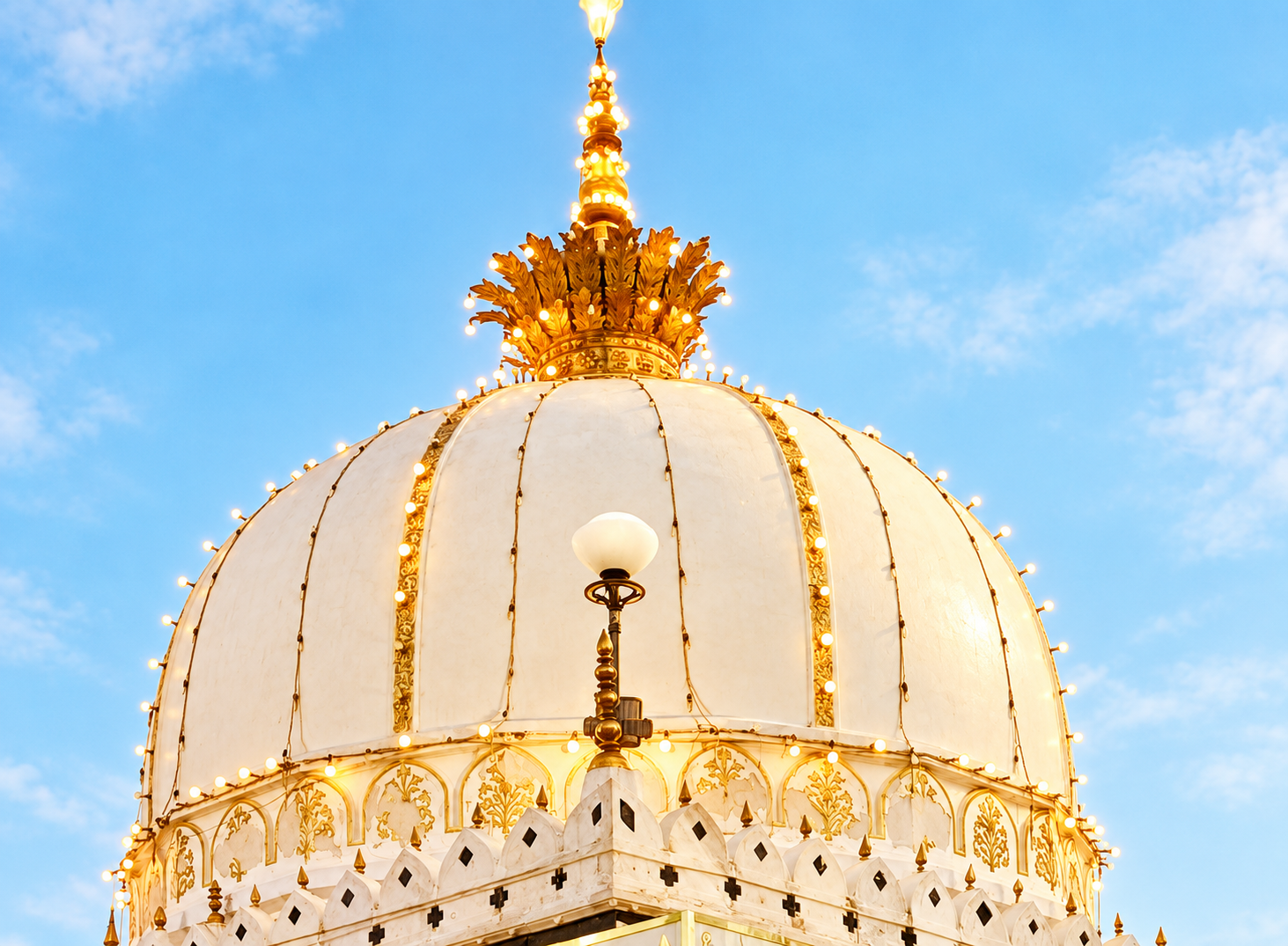
Ajmer, Rajasthan
Ajmer Sharif Dargah
Hazrat Khwaja Moinuddin Hasan Chishti (RA)
Ajmer Sharif is the resting place of Khwaja Gharib Nawaz and the heart of this website’s devotional journey. The shrine’s courtyards, mosques and gateways reflect centuries of devotion and patronage. Pilgrims come for ziyarat, dua and remembrance; the annual Urs is an important part of its living tradition. Explore our detailed biography, heritage and visitor guides for a fuller introduction.
Nizamuddin, Delhi
Hazrat Nizamuddin Auliya Dargah
Hazrat Nizamuddin Auliya (RA)
The shrine of Hazrat Nizamuddin Auliya is an important place of Sufi remembrance in Delhi. The precinct also contains the resting place of Amir Khusrau and the grave of Mughal princess Jahanara. Delhi Tourism describes gatherings associated with the anniversaries of Nizamuddin Auliya and Amir Khusrau. Its setting brings together devotion, poetry and the layered history of the city.
Sarwar, Rajasthan, India
Sarwar Sharif Dargah
Hazrat Khwaja Fakhruddin Chishti (RA)
Sarwar Sharif is the resting place of Hazrat Khwaja Fakhruddin Chishti (RA), the eldest son of Khwaja Moinuddin Hasan Chishti (RA), Gharib Nawaz. His shrine connects the devotional heritage of Ajmer with the family of Khwaja Sahib beyond the city. For devotees exploring this family legacy, Sarwar offers a meaningful place for ziyarat, dua and remembrance. Approach the Astana with reverence and confirm local visiting arrangements before travelling.
Source: H. B. Sarda · Ajmer: Historical and Descriptive, p. 90 (IGNCA)
Sambhar, Rajasthan, India
Sambhar Sharif Dargah
Hazrat Khwaja Husamuddin Jigar Sokhta (RA)
The shrine at Sambhar honours Hazrat Khwaja Husamuddin Jigar Sokhta (RA), also recorded as Hisamuddin Sokhta. He was the son of Khwaja Fakhruddin Chishti (RA) and grandson of Khwaja Gharib Nawaz (RA). Together, the shrines at Ajmer, Sarwar and Sambhar help visitors understand three generations of this revered family. A visit invites quiet reflection on the continuity of faith, family remembrance and devotion.
Source: H. B. Sarda · Ajmer: Historical and Descriptive, p. 90 (IGNCA)
Chirag Delhi, New Delhi, India
Dargah of Khwaja Nasiruddin Chiragh-e-Delhi
Hazrat Khwaja Nasiruddin Mahmud Chiragh-e-Delhi (RA)
The Dargah of Khwaja Nasiruddin Mahmud, revered as Chiragh-e-Delhi, stands in the Delhi neighbourhood that carries his name. The shrine forms part of the city’s historic Sufi landscape, alongside the places of remembrance associated with Hazrat Nizamuddin Auliya and Qutb Sahib. Its setting offers visitors an opportunity to explore Delhi’s devotional heritage and to pause for dua and reflection amid the life of the surrounding neighbourhood.
Panipat, Haryana, India
Dargah of Bu Ali Shah Qalandar
Hazrat Shaikh Sharafuddin Bu Ali Shah Qalandar (RA)
The Dargah of Bu Ali Shah Qalandar is a prominent spiritual landmark in Panipat, Haryana. It honours Shaikh Sharafuddin, remembered by his beloved name Bu Ali Shah Qalandar. The shrine is among the city’s recognised historic places and remains an important destination for devotees. Visitors can include it in a journey through northern India’s Sufi heritage, allowing time for respectful ziyarat and reflection rather than treating it only as a monument.
Pakpattan, Punjab, Pakistan
Darbar Baba Farid Ganjshakar
Hazrat Khwaja Fariduddin Masud Ganjshakar (RA)
Darbar Baba Farid in Pakpattan, honours Hazrat Khwaja Fariduddin Masud Ganjshakar (RA), widely known as Baba Farid. A revered Chishti Sufi and Punjabi poet, he is central to Pakpattan’s identity as a place of pilgrimage and remembrance. His shrine extends this directory beyond India to a closely connected part of the region’s spiritual heritage. Visitors travelling internationally should check current entry requirements and shrine arrangements before planning a journey.
Mehrauli, Delhi
Qutb Sahib Dargah
Hazrat Khwaja Qutbuddin Bakhtiyar Kaki (RA)
The dargah of Khwaja Qutbuddin Bakhtiyar Kaki, also known as Qutb Sahib, stands in Mehrauli. The area around the shrine became closely connected with the later Mughal court, with Zafar Mahal among its neighbouring heritage buildings. A visit offers an opportunity to reflect on the relationship between Delhi’s devotional places and its architectural history.
Fatehpur Sikri, Uttar Pradesh
Dargah of Sheikh Salim Chishti
Hazrat Sheikh Salim Chishti (RA)
The white-marble tomb of Sheikh Salim Chishti is among the defining monuments of Fatehpur Sikri. Within the historic mosque precinct, it forms a striking contrast with the surrounding red-sandstone architecture. Agra’s district guide lists it alongside the Jama Masjid and Buland Darwaza. The shrine is a place of devotion within a wider heritage complex, so plan time for both ziyarat and the surrounding monuments.
Mumbai, Maharashtra
Haji Ali Dargah
Haji Ali
Haji Ali Dargah is a mosque and shrine on an islet off the Worli coast in southern Mumbai. The sea-facing location gives it a distinctive place in the city’s sacred landscape. Its approach and surroundings differ from an inland shrine: check current local access and weather information before setting out, and leave enough time for the visit.
Kalaburagi (Gulbarga), Karnataka
Khwaja Bande Nawaz Dargah
Hazrat Khwaja Bande Nawaz Gesu Daraz (RA)
This dargah commemorates Syed Muhammad Hussaini, revered as Khwaja Bande Nawaz Gesu Daraz. Kalaburagi’s district account identifies him with the Chishti order and emphasises understanding and harmony in his legacy. The shrine is a major point of reference for exploring Sufi heritage in the Deccan, connecting the city’s history with a continuing tradition of pilgrimage.
Nagore, Tamil Nadu
Nagore Dargah
Hazrat Shahul Hameed, Nagore Andavar (RA)
Nagore Dargah, in Tamil Nadu’s Nagapattinam district, is associated with the saint revered as Nagore Andavar. Its five minarets are an important part of the complex’s architectural identity. The local devotional tradition remembers participation by different communities in the shrine’s heritage. Nagore provides a southern coastal perspective on India’s varied traditions of pilgrimage and reverence.
Source: Nagore Nayagam Nesa Pasarai Trust · heritage account
Dewa, Barabanki, Uttar Pradesh
Dewa Sharif
Haji Waris Ali Shah (RA)
Dewa Sharif is associated with Haji Waris Ali Shah and his message of love for humanity. The Barabanki district account describes the shrine as a place of reverence shared by Hindu and Muslim devotees. It also distinguishes remembrance of Waris Ali Shah from the Dewa Mela connected with his father, Qurban Ali Shah. Check the particular occasion when planning a visit.
Approaching each shrine with adab
Allow time for prayer and reflection. Dress respectfully, follow local guidance on footwear and head covering, keep pathways clear, and seek permission before photographing people or devotional gatherings. Customs and access arrangements differ between shrines.
Before travelling, confirm opening hours, the current Urs programme and any special arrangements with the relevant shrine. Lunar observances move through the Gregorian calendar; historical descriptions do not establish this year’s dates. Accommodation and assistance described elsewhere on this website concern our Ajmer hosts and are not offered on behalf of the other shrines listed here.