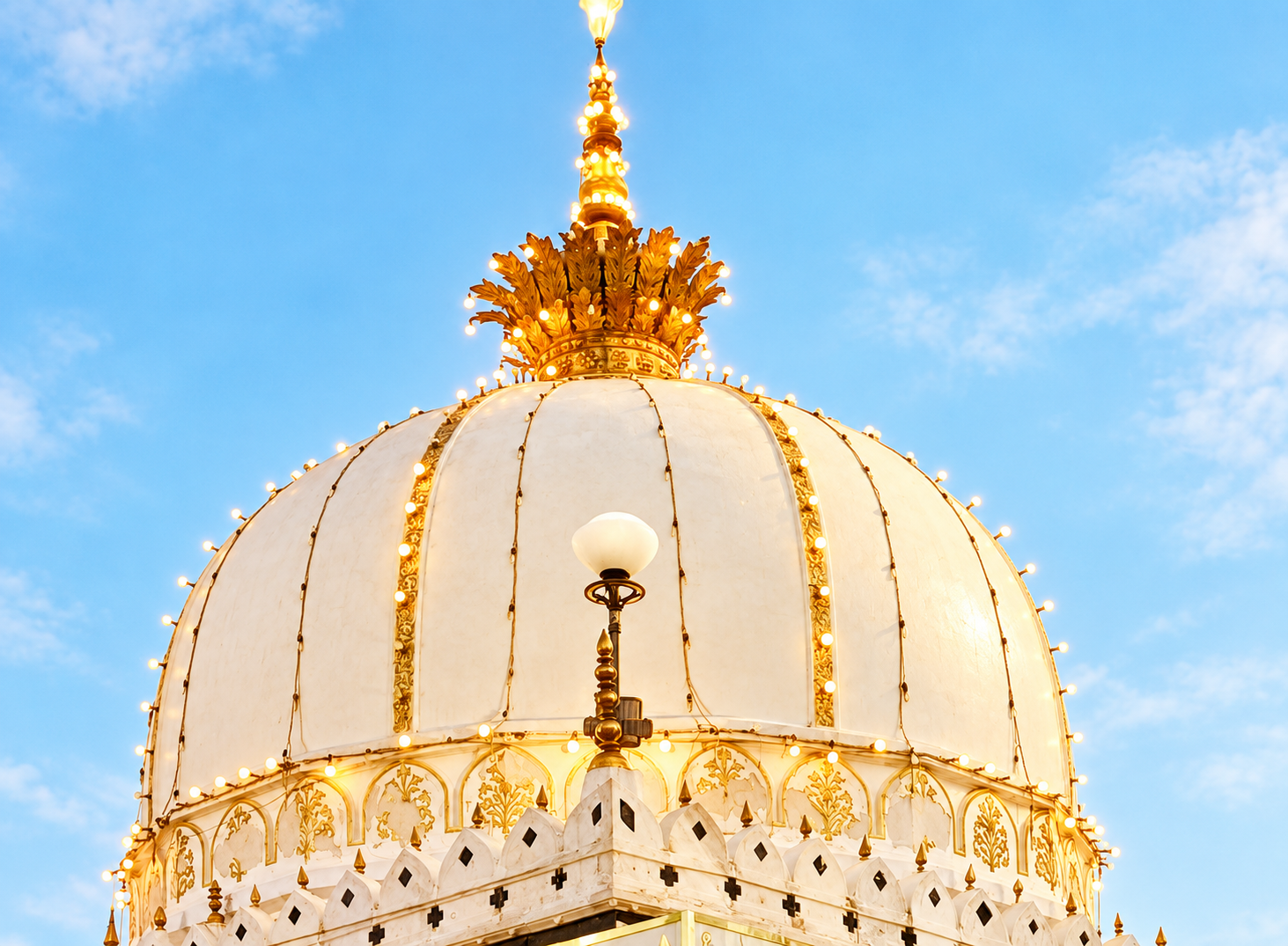
What Urs commemorates
Urs is the annual remembrance of Khwaja Moinuddin Hasan Chishti’s passing. In Sufi devotional understanding, the occasion is associated with union and nearness to the Divine; remembrance therefore carries an expression of love as well as loss. The World Bank’s publication on Ajmer’s heritage describes this spiritual interpretation. Source: World Bank · Inclusive Heritage-based City Development in India
Understanding the gathering begins with understanding the saint. The visitor comes to remember a life whose name, Gharib Nawaz, expresses a lasting association with care for people in need. Read the full life and legacy for that context before exploring individual observances.
Rajab and the changing calendar
The government’s India Cine Hub describes the central six-day observance as running from the first to the sixth of Rajab. Rajab belongs to the Islamic lunar calendar, so the corresponding Gregorian dates change each year. The principal days and the arrangements surrounding them are not necessarily identical in duration. Source: India Cine Hub · Dargah Khwaza Sahib, Ajmer
Use a current announcement to plan travel. Confirm the moon announcement, programme and access arrangements through an identifiable current notice from the shrine administration. This guide explains Urs; it is not an official announcement of an upcoming programme.
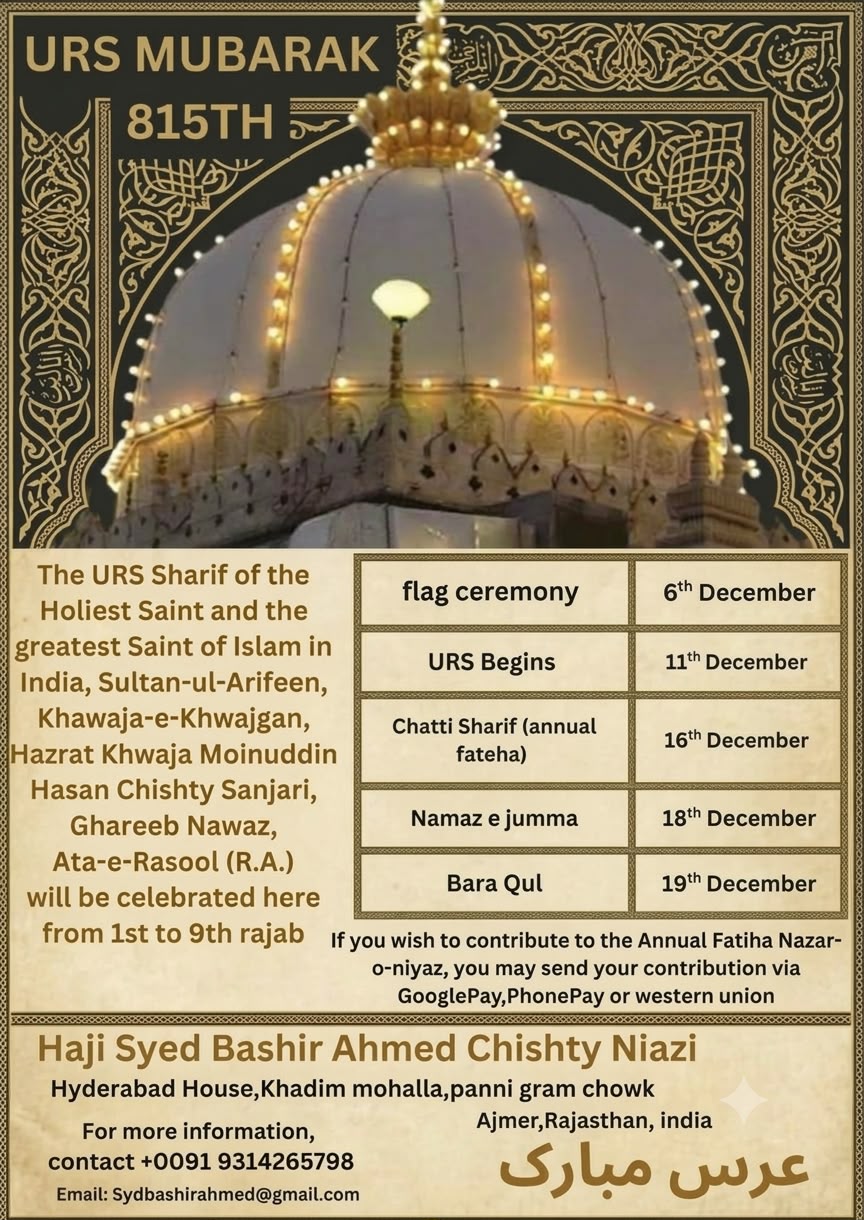
Check the year and issuing organisation on any poster. An old photograph or an automatically calculated calendar should not be treated as confirmation of travel dates.
The flag ceremony and the gathering
Rajasthan Tourism records flag-hoisting among the traditions associated with Urs. It is one of the recognisable public expressions of the annual remembrance. Its current timing and arrangements should be taken from that year’s announcement. Source: Rajasthan Tourism · Ajmer
During a procession or a busy gathering, move considerately, keep routes clear and avoid stopping a flow of people for photographs. Agree on a meeting point with your companions. Children’s and older relatives’ need for rest should shape your plans.
Ziyarat, prayer and Chhati Sharif
Visiting the shrine and making prayer are central to the occasion. The World Bank heritage publication identifies the sixth of Rajab as Chhati Sharif and describes prayer and recitation associated with its conclusion, or Qul. These observances have a devotional setting and should not be approached simply as performances to watch. Source: World Bank · Inclusive Heritage-based City Development in India
Bring your intentions with care, respect other people’s privacy in prayer, and ask a responsible attendant about participation when unsure. No offering or ceremony on this website is represented as a guarantee that a particular personal outcome will occur.
Sama, poetry and qawwali
The Census of India’s 1961 account of Rajasthan’s fairs records assemblies of Sufi poetry during Urs. It provides historical evidence of the importance of listening and recitation in the gathering; its descriptions of hours belong to that period, not to a current timetable. Source: Census of India · Fairs and Festivals, Rajasthan (1961)
Sama refers to attentive spiritual listening. Respect the words, the setting and the concentration of the people around you. Hearing a performance does not establish permission to record it. Confirm arrangements for a particular gathering or artist locally; this website does not promise a performance schedule or a live broadcast.
Chadar, food and participating in service
The original devotional website connects Urs with chadar, niyaz, prayer and hospitality. Decide what you wish to arrange: a cloth offering, the distribution of food, or another specific act of service. These involve different preparations and should not be treated as interchangeable purchases.
Confirm the responsible person, what will be provided, any costs and how a receipt will be issued. This website does not currently receive online payments. The offerings guide explains the questions to ask, while the Khadim profile introduces Peer Syed Bashir Ahmed Chishty Niazi and the contact route.
Prepare for the journey and the people with you
- Confirm the current programme, accommodation and return transport together.
- Plan rest, drinking water and essential medicines for your group.
- Keep your accommodation address and contact numbers on paper as well as your phone.
- Choose a clear meeting point in case companions become separated.
- Allow extra travel time without assuming immediate access to a particular interior.
- Check current instructions for bags, photography and movement through the precinct.
The visitor guide develops these preparations in detail. If travel is not possible, learning, prayer and thoughtful service in your own community can still make remembrance meaningful.
A remembrance from the original archive
814th Urs
This remembrance honours a past Urs gathering. For the current programme, please see the announcements above.
Archived source: the original article